

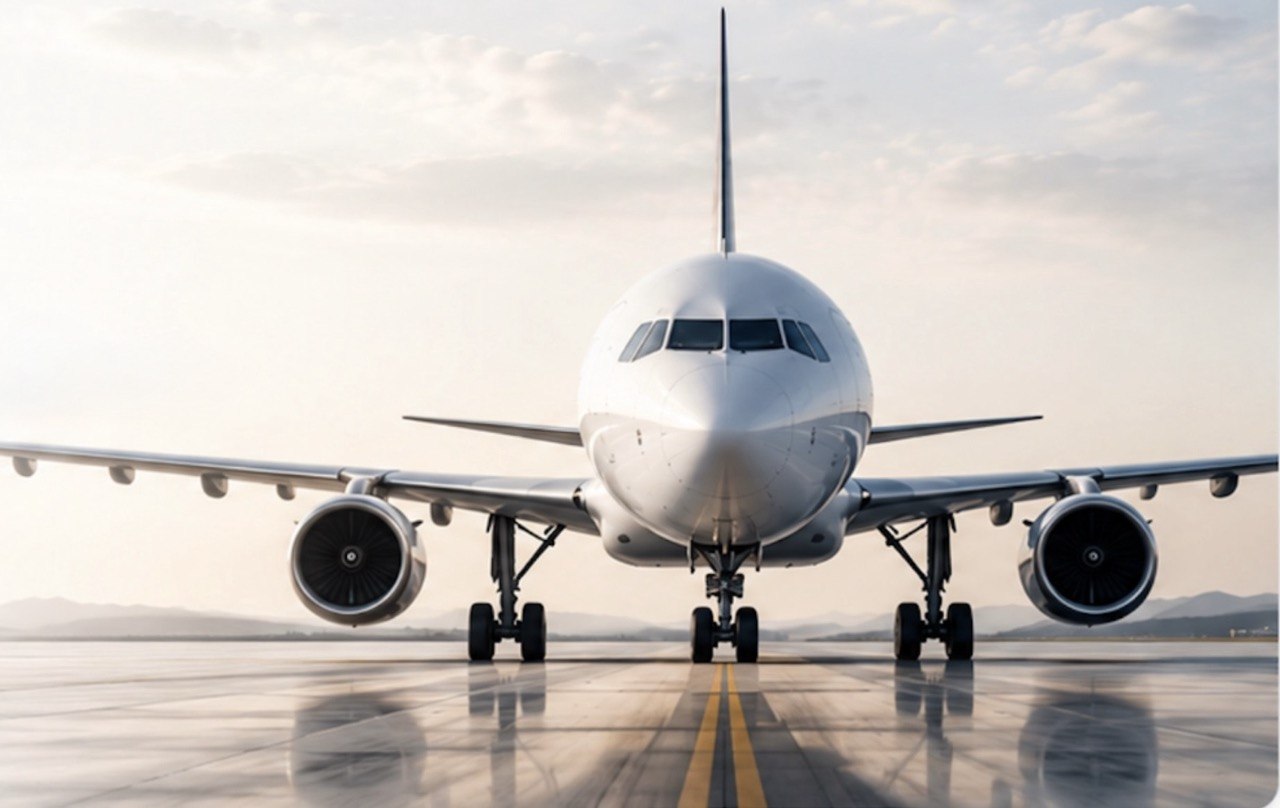
Suppose you are on an aircraft and throw a stone up in the air. Whatever you do, the stone will one day come back to the Earth. That’s gravity, the force that holds us down to our planet. However, human beings have discovered how to conquer this power. Not by throwing stones, but by constructing rockets strong enough to propel spacecraft, satellites and even astronauts into the space.
The launch of rockets that leave the gravity of the Earth is a feat of amazing engineering and physics that has ever been achieved. This trip starts by learning about the concept of gravity, then the concept of speed, thrust and controlled movement that are used to counteract the effect of gravity by rockets.
Let’s examine the way rockets escape the clutches of gravitation on Earth and fly into space.
About 90% of a rocket’s launch weight is fuel
Understanding Earth’s Gravity
All massive objects gravitate towards other massive objects, and it is this pull that we call gravity. On the surface of the Earth, objects fall at approximately 9.8 m/s2. This implies that a ball that you dropped in your hand will fall faster and faster as it descends to the ground.
And then gravity does not stop just because you have reached a mountain or boarded a plane in the air, it reaches deep into space. As a matter of fact, even the International Space Station (ISS) that is orbiting the earth at a distance of approximately 400km above the Earth feels approximately 90% the surface gravity of the Earth.
The fact that you need to escape the gravity of the Earth does not mean that you are not in gravity anymore, it simply means that you can overcome the gravity at a certain speed.
Velocity: The Key to Escape
In order to break the gravitational pull of the Earth, rockets do not just fly up. Instead, they need speed. The most significant idea is known as the escape velocity, the velocity that a given object has to acquire in order to escape the pull of a planet without any additional propulsion.
In the case of Earth, the escape velocity is approximately 40,270 km/h (11.2 km/s). When an object travels at this speed, it will be able to travel away without reversing itself. Rockets do not necessarily make it to the top of their full escape velocity in a second, rather, they gain momentum as they climb through the atmosphere.
However, in most missions, particularly those that remain in orbit, rockets do not require maximum escape velocity. A spacecraft requires only orbital velocity to remain in orbit around the earth, 28,000 km/h (7.8 km/s). When it attains this horizontal velocity high over the atmosphere, it will orbit the Earth in a constant free-fall, that is what orbit is.

Newton’s Third Law: How Rockets Create Thrust
How does a rocket produce the tremendous propulsion required to launch it into these fantastic velocities? The solution of this can be found in one of the most fundamental laws of physics:
“For every action, there is an equal and opposite reaction.” Isaac Newton’s Third Law of Motion
Rockets carry fuel and an oxidiser. During the combustion of this propellant, it gives rise to the high-pressure gas, which is expelled through the engine nozzle of the rocket in a very high speed. The downward moving gas helps in propelling the rocket. The more rapidly and violently the gas is expelled, the higher the propulsion on the rocket.
The reason why rockets are long and slim is because it requires large fuel tanks and strong engines to generate sustained thrust which can defeat the gravity.
Stages: Dropping Weight to Run Faster
Staging is one of the best inventions made in rocketry. A rocket is constructed in stages, with each stage consisting of its own engines and fuel. With the increasing altitude of a rocket, the lower engine burns out, and this empty propellant tank is ejected to make it lighter.
The effects of this are twofold:
- Less mass to accelerate
- Greener utilization of the fuel, that is left
The contemporary rockets can be two or three stage. As an illustration, the LVM3 (launcher employed in missions such as Gaganyaan) of India relies on several stages to get to the orbit. Every stage provides the craft with a push, and then falls back when its fuel is used.
Atmospheric Drag and Losses of Gravity
During the upward motion of rockets, two forces acting against it occur:
Gravity Loss
Although a rocket is flying into the sky, it is being pulled downwards by gravity. Not only does the rocket have to push itself upwards but also overcome this pull. This loss of gravity needs additional fuel and energy.
Atmospheric Drag
Towards the surface of the Earth, the air resistance decelerates the rocket. The larger the thickness of the atmosphere, the greater the resistance. This drag reduces as the air thins and the rocket rises.
The trajectories that are designed by the rocket engineers reduce these losses. Instead of flying in a straight line, rockets are curved such that the vertical and horizontal motion is balanced, which maximises the use of fuel.
Escape velocity from Earth is ~40,270 km/h
The Rocket's Ascent Profile
The normal rocket rise consists of a number of stages, like:
Liftoff
This is the dramatic initial moment when the rocket’s engines ignite, and the ship lifts off the launch pad. When this happens, all engines normally come to full blast in order to overcome the statical friction that is holding the rocket to the ground and initiate a upward acceleration.
Rockets like:
- SpaceX's Falcon 9
- India's LVM3
- The SLS of NASA (Space Launch System)
use high-performance engines and superior propellant mixtures.
Recent developments such as reusable rockets, efficient engines etc also enhance cost-effectiveness and sustainability of launch systems.
The Human Element
In the background of each and every rocket launch, there is an enormous group of engineers, scientists, technicians, and mission planners. Some of them model trajectories, test equipment, simulate flight situations and work out safety systems. The process of breaking free of the Earth is not simply a feat of engineering, it is a feat of accuracy of the engineering work, risk analysis and collaboration across the disciplines.
Why This Matters
The ability to know the process by which the rockets leave the surface of the Earth is a key aspect in the exploration of space. It is a step that permits the satellites to orbit, the ISS to be active, and it is the step that enables humans and robots to go to the Moon, Mars, and other planets. It is also a reward to the power of scientific knowledge and engineering design to defeat seemingly overwhelming forces of nature.
Rockets are one of the best tools to understand the universe, and the capability of the rockets to overcome the pull of the planet is where the adventure comes in.
Final Thought
Gravity has no mercy, it keeps our feet on the ground and draws everything to the itself. However, by studying physics, mathematics, and engineering, mankind has come to know that it is not wise to struggle in vain with gravity, but to cooperate with it, acquiring the speed, momentum, and accuracy, which is required to escape.
Any launch of the rocket is an achievement of knowledge, collaboration, and human interest. The journey out of the gravity of our planet is not merely a physical affair, it is the initiation of the extension of humankind into the stars.

Join the conversation
No comments yet
Be the first to share your thoughts!
Sign In to Comment