

Aviation has long faced a difficult question: can an industry built on burning fuel at 35,000 feet ever become sustainable? As pressure mounts from regulators, investors and passengers, Sustainable Aviation Fuel (SAF) is emerging as the sector’s most viable near-term answer—though far from a complete solution.
May 22, 2026
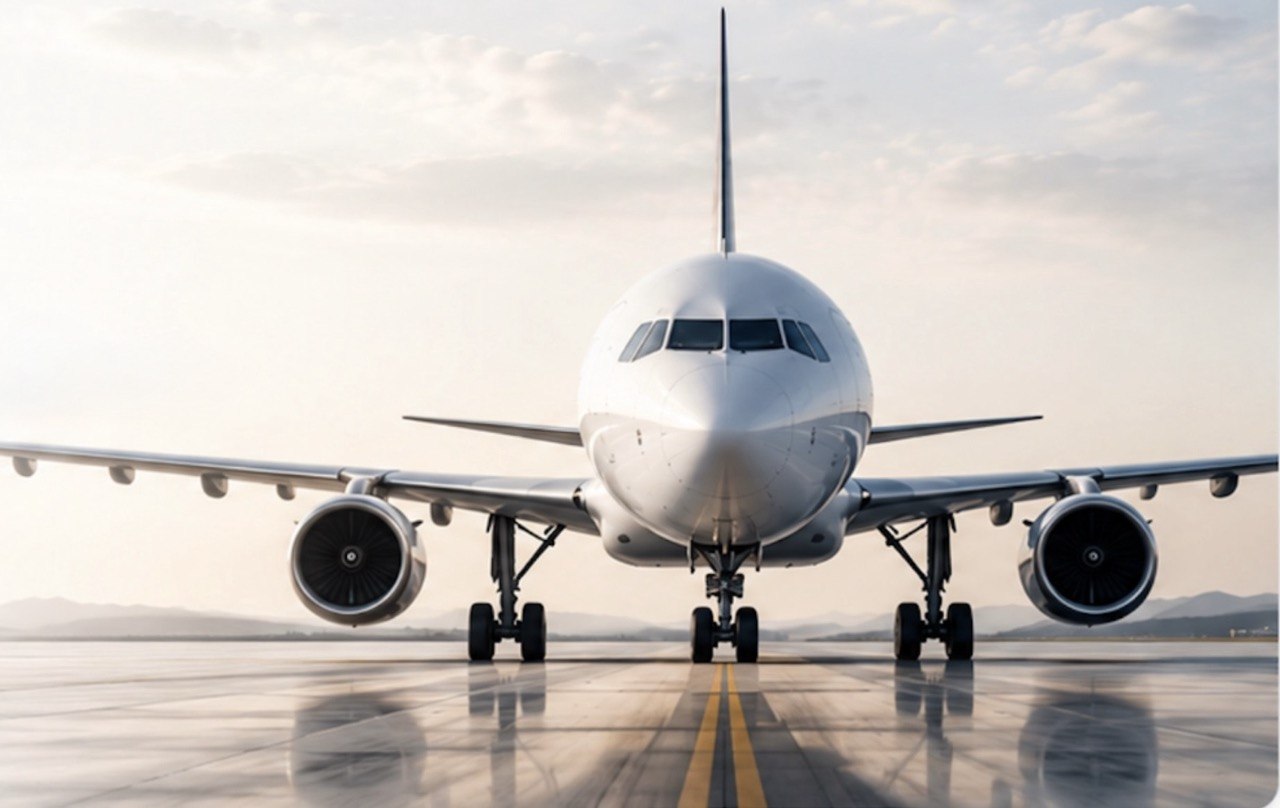
Unlike futuristic concepts such as hydrogen or electric aircraft, SAF works within today’s aviation system. It can be blended with conventional jet fuel and used in existing engines without major modifications, allowing airlines to reduce emissions without redesigning fleets or infrastructure.
But while the promise is clear, the path to scale is anything but.
A PRACTICAL BUT PARTIAL SOLUTION
SAF is derived from non-petroleum feedstocks such as used cooking oil, agricultural waste and synthetic fuels produced from hydrogen and captured carbon. Depending on the production pathway, it can reduce lifecycle emissions by up to 65–80% compared with conventional jet fuel, according to industry estimates and aerospace manufacturers.
Crucially, SAF is compatible with existing aircraft and fuel systems, typically blended at levels of up to 50%. This “drop-in” capability makes it the most immediately deployable option in an industry where fleet replacement cycles can stretch over decades.
For airlines under pressure to cut emissions without disrupting operations, SAF is less a breakthrough and more a bridge.
DEMAND IS RISING, SUPPLY IS NOT
Despite its potential, SAF remains a tiny fraction of global aviation fuel use. Industry estimates suggest it will account for less than 1% of total jet fuel demand in the near term, highlighting the scale of the gap between ambition and reality.
Production capacity is growing, but not fast enough. While hundreds of projects are being explored globally, many struggle to secure financing due to high costs and uncertain returns. According to industry analysis, scaling SAF production could require investments of up to $1–1.5 trillion by 2050.
The supply challenge is compounded by feedstock limitations. Bio-based SAF relies on waste oils and agricultural residues, which are finite. Synthetic fuels, or e-SAF, offer theoretically unlimited potential but require vast amounts of renewable energy—adding another layer of complexity.
The result is a classic aviation dilemma: demand is policy-driven, but supply is economics-driven.
COST PRESSURES AND AIRLINE ECONOMICS
The biggest barrier to SAF adoption is cost. Today, SAF can be up to six times more expensive than conventional jet fuel, creating a significant gap for airlines already operating on thin margins.
Fuel typically accounts for 30–40% of an airline’s operating costs. Introducing SAF at scale without cost parity would directly impact yields, ticket pricing and profitability.
Airlines have responded by entering long-term offtake agreements with SAF producers, signalling demand while trying to lock in future supply. Some have also begun offering passengers the option to pay a premium for lower-emission flights.
However, without regulatory support—such as subsidies, tax incentives or carbon pricing—the economics remain challenging.
REGULATION IS DRIVING THE SHIFT
Policy is emerging as the primary catalyst for SAF adoption. In Europe, the “ReFuelEU Aviation” initiative mandates a gradual increase in SAF usage, starting at 2% in 2025 and rising significantly over the coming decades.
At the global level, the International Civil Aviation Organization (ICAO) has introduced the Carbon Offsetting and Reduction Scheme for International Aviation (CORSIA), aiming to cap net emissions from international flights.
These measures are designed to make conventional kerosene less attractive over time, effectively pushing airlines toward SAF despite higher costs.
In aviation, sustainability is no longer optional—it is becoming regulated.
INDIA AND THE GLOBAL LANDSCAPE
India, one of the fastest-growing aviation markets, faces a unique challenge. Rising domestic demand, expanding fleets and infrastructure constraints are increasing emissions even as the country pushes for greener growth.
While SAF adoption in India remains at an early stage, policymakers and airlines are beginning to explore pathways, including domestic production and blending mandates.
Globally, airlines and manufacturers are aligning around SAF as the most realistic route to meeting net-zero targets by 2050. Companies such as Airbus have positioned SAF as a central pillar of decarbonisation, alongside improvements in aircraft efficiency and operations.
At the same time, airports are expected to play a role in enabling supply chains, though SAF can largely integrate into existing fuel distribution systems without major infrastructure changes.
BEYOND FUEL: THE LIMITS OF SAF
Even at scale, SAF is not a complete solution. Aviation’s climate impact extends beyond carbon dioxide to include non-CO₂ effects such as contrails and nitrogen oxides, which also contribute to global warming.
Reducing these impacts will require a broader set of measures, including more efficient aircraft, optimised flight paths and potentially changes in demand patterns.
SAF may reduce emissions—but it does not eliminate aviation’s environmental footprint.
WHAT COMES NEXT
The future of SAF will depend on three factors: cost, scale and coordination.
Technological advancements could reduce production costs over time, particularly for synthetic fuels. Regulatory frameworks will need to balance incentives with industry competitiveness. And collaboration across airlines, energy companies and governments will be essential to build a viable supply ecosystem.
For now, SAF represents the aviation industry’s most credible path toward decarbonisation—but also its most complex.
The question is no longer whether aviation can become greener. It is whether the industry—and its stakeholders—are willing to bear the cost of getting there.


Join the conversation
No comments yet
Be the first to share your thoughts!
Sign In to Comment