Every year, aviation moves goods worth over $6.2 trillion across the world. Semiconductors from Taiwan, vaccines from Belgium, fresh flowers from Kenya, and luxury goods from Milan all get transported through the air. It does this on 39 million flights, across 22,000 routes, in the bellyhold of passenger jets and the cargo decks of dedicated freighters. In 2024 alone, air cargo demand grew 11.3%, the strongest full-year performance on record, as reported by IATA. Hence, in the present day, the aviation industry forms the backbone of global trade and logistics.
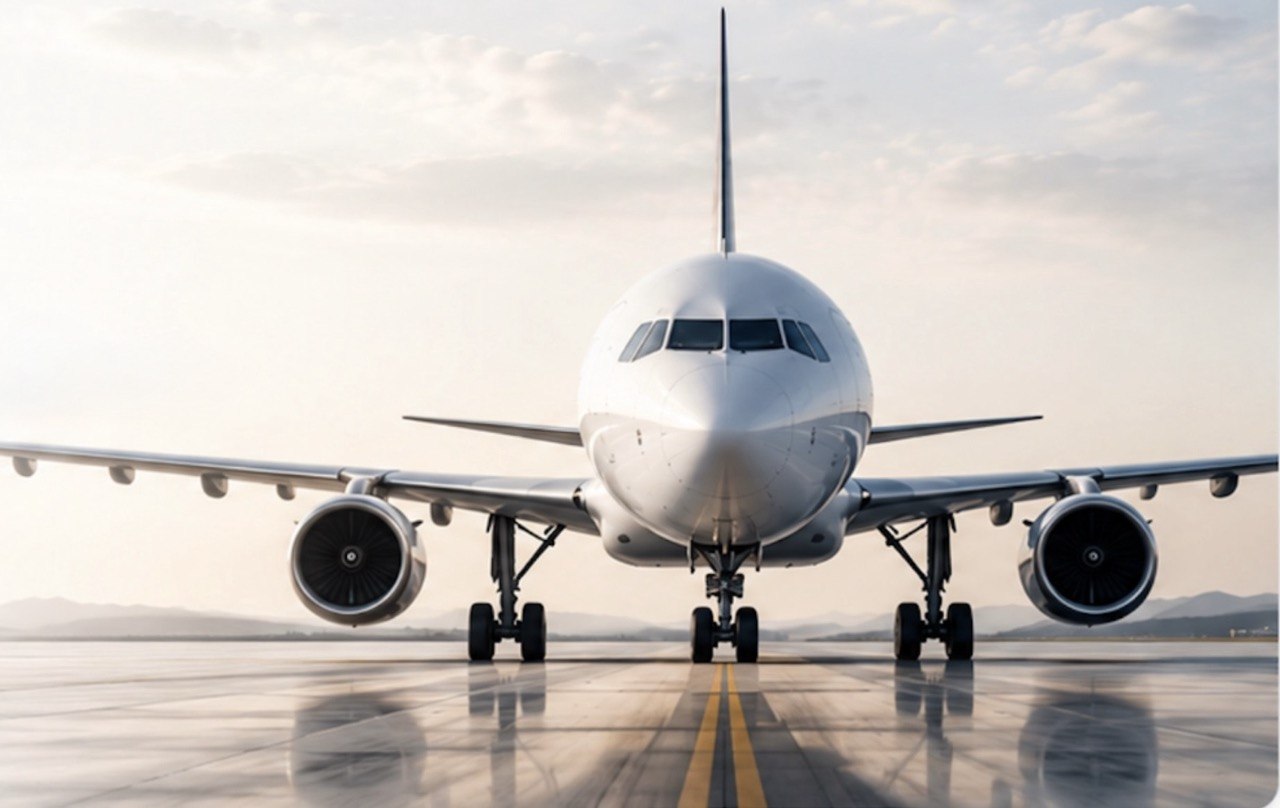
Air freight operates through two parallel channels. Dedicated freighter aircraft like the Boeing 777F carry up to 100 tonnes of cargo and haul bulk shipments. Approximately 40% of annual global air cargo moves in the belly hold of passenger aircraft, as per the reports of the World Economic Forum. Moreover,* a standard passenger 777 carries nearly 20 tonnes of belly cargo on every commercial flight. It is this dual-channel model of freighters and belly space that gives air cargo its extraordinary reach and frequency.
Cargo logistics through air serve as the preferred mode of transportation. In 2025, AI-related hardware and semiconductors accounted for 53.5% of the value of all air-transported trade, while representing only 7% of volume, as reported by IATA. Pharmaceuticals, fresh produce, luxury goods, and e-commerce parcels are among the top trade categories.
Air freight ensures rapid delivery of high-value and time-sensitive cargo
Economic Impact of Supply Chain Fallout in the Aviation Industry
As per PwC's supply chain analysis, when passenger flights collapsed to 66% year-on-year by volume during the COVID-19 Pandemic, air cargo tonne-kilometres (CTKs) fell by 15.3% year-on-year in the three months to April 2020. The shutdown of commercial aviation severely limited air cargo capacities, making it harder to move vital supplies such as medical equipment to fight the outbreak around the world. Airlines lost $371 billion in passenger operating revenues in 2020, and millions of jobs were destroyed across the aviation supply chain, as reported by the Eurasian Research Institute.
In April 2010, when Iceland's volcano shut down European airspace for six days, approximately 108,000 commercial flights were cancelled, airlines lost revenues of USD 1.7 billion, and 10.5 million passengers had their travel plans disrupted. The cargo damage was visceral and immediate. Kenya destroyed 400 tonnes of flowers that it was unable to ship to the UK. The country's economy was estimated to be incurring losses of $3.8 million each day of the disruption. Zambia's flower and vegetable sector lost $150,000 per day.
Bone marrow shipments for transplant patients in Europe were critically delayed. The price of shares in major airlines dropped between 2.5 and 3.3% during the eruption, as reported by Internet Geography. IATA estimated airlines were losing £130 million ($200 million) per day, as per its own May 2010 economic briefing. Both crises underscored the same truth: air cargo is not a luxury logistics channel. It is a critical infrastructure.
Shipments move seamlessly from point of production through air transport
Looking Ahead
Aviation supports $8.3 trillion in global trade and 86.5 million jobs worldwide, as reported by IATA. The two disruption events of 2010 and 2020 cost the global economy hundreds of billions of dollars combined and demonstrated beyond any argument that air cargo is not a single industry's problem; when it fails, it is everyone's. As tariff tensions, geopolitical flux, and climate-related airspace disruptions mount through the late 2020s, the resilience of the aviation cargo system will be tested again. The question is not whether aviation matters to global trade. It is whether the world has learned from the last two crises to protect itself before the next one arrives.





Join the conversation
No comments yet
Be the first to share your thoughts!
Sign In to Comment