
Loading Intelligence
The technology has already been demonstrated through test flights at events including the 2025 Osaka-Kansai Expo.
In late June, Toyota Motor Corp. agreed to form a joint venture with U.S.-based Joby Aviation Inc. to oversee eVTOL manufacturing. The venture plans to apply Toyota’s Production System to improve efficiency and minimise defects, initially producing prototypes for certification evaluations while expanding manufacturing capacity to meet expected demand.
Based in California, the new commercial aircraft manufacturing company will be 51% owned by Toyota, which will invest $1.02 million (about ¥160 million), while Joby will hold the remaining 49% with a $980,000 investment.
“Deepening our partnership marks a significant milestone toward realising the future of mobility,” Toyota Chairman Akio Toyoda said.
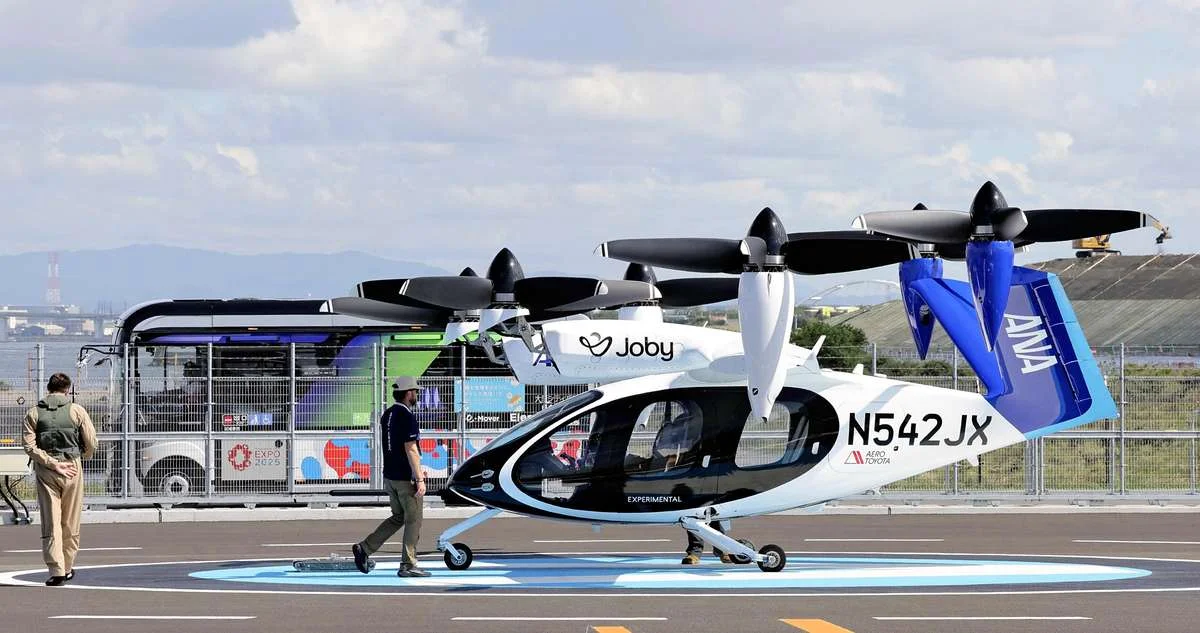
Joby also gave the public a closer look at its eVTOL aircraft during the Expo, conducting demonstration flights in partnership with ANA Holdings Inc. The five-passenger Joby S4 has a maximum range of 160 kilometers and is widely regarded as one of the leading candidates to enter commercial service.
Toyota’s interest in aerial mobility dates back to 1925, when company founder Sakichi Toyoda offered a cash prize for developing a battery capable of powering a nonstop flight across the Pacific.
Toyota has supported Joby since 2020 through capital investments while also providing expertise in automotive manufacturing and technology development.
SkyDrive Inc., another eVTOL developer based in Toyota, Aichi Prefecture, and founded by former Toyota engineers, is also making steady progress toward commercial operations. The company has begun preliminary discussions with the U.S. Federal Aviation Administration (FAA), where officials are expected to review its aircraft design concept and the measures planned to meet safety requirements.
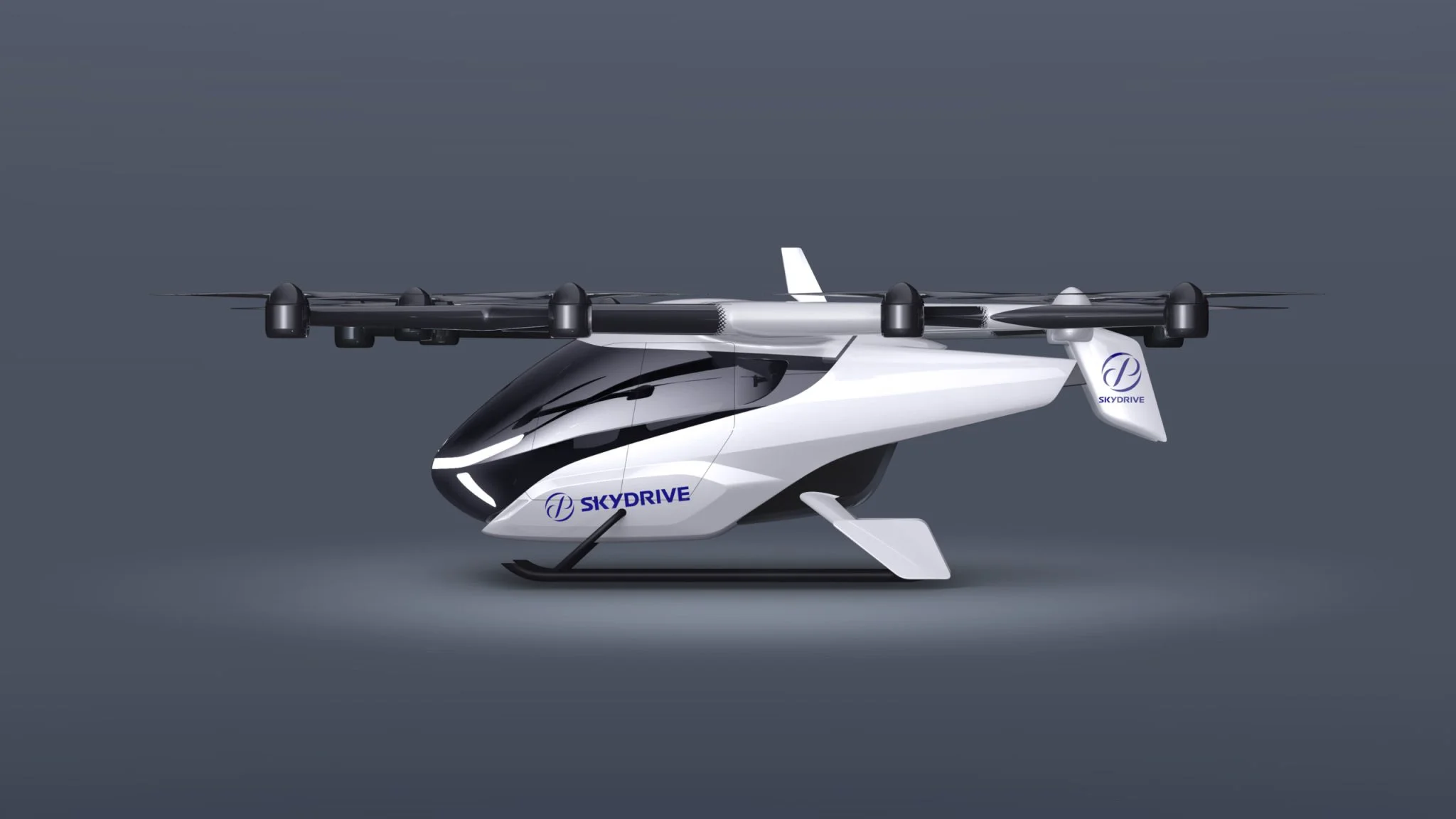
SkyDrive conducted a demonstration flight in Tokyo in February in collaboration with Mitsubishi Estate Co. and other companies. The demonstration included procedures such as pre-flight security screening.
In June, the developer said it had confirmed that its aircraft under development could fly stably at an operational speed of 100 kph, demonstrating that it performed as envisioned during the design phase.
During a high-speed flight test in Yamaguchi Prefecture, SkyDrive evaluated the aircraft’s stability and manoeuvrability, along with the performance of its onboard systems. The company said the tests confirmed that the aircraft and its systems functioned as expected, validating its design and analysis.
So far, SkyDrive has conducted hundreds of test flights and trials, including wind tunnel testing at a facility operated by the Japan Aerospace Exploration Agency (JAXA). The company plans to complete the necessary steps to begin commercial eVTOL operations in 2028.
As of August 21, Japan’s Ministry of Land, Infrastructure, Transport and Tourism had received five applications for eVTOL type certification. The applicants include Joby and SkyDrive, setting the stage for competition between domestic and international developers seeking to bring eVTOL aircraft into commercial service.
The global market is also advancing rapidly. In the United States, Archer Aviation Inc. became the second company to receive a commercial operator certificate from the Federal Aviation Administration (FAA), following Joby in June 2024.
In China, EHang received type certification from aviation authorities in 2023, followed by a production certificate in 2024.
Under Japan’s Growth Strategy, endorsed by the Cabinet in July, the government has set a goal for the country’s eVTOL sector to capture around ¥150 billion of the global market by 2040.
As competition intensifies to combine advanced technology with safe and reliable operations, expectations are growing for companies in the Tokai region to play a significant role in advancing Japan’s eVTOL industry.



Join the conversation
No comments yet
Be the first to share your thoughts!
Sign In to Comment