
Loading Intelligence
Rather than originating in a corporate boardroom, the carrier was founded by Shravan Kumar Vishwakarma, an entrepreneur who began his career as a tempo driver in Kanpur. This background offered him a direct perspective on the various levels of the Indian transport system, ranging from local road transport to the national rail network.
Now established as the first scheduled airline based in Uttar Pradesh, as per the reports of The Economic Times, Shankh Air intends to reposition air travel from a luxury service to a practical utility. It will prioritize competitive and stable pricing during peak seasons and link underserved regional hubs. This includes Lucknow and Noida, among other major metropolitan areas. The airline aims to make air travel as accessible to the general public as long-distance bus services
Shankh Air is an Indian airline proposal from Shankh Aviation Pvt. Ltd., which intends to operate as a full-service carrier on domestic flights and expand to international flights. On October 16, 2024, Shankh Air officially entered the Indian aviation ecosystem, which is highly regulated, and was given its No Objection Certificate (NOC) by the Ministry of Civil Aviation, as reported by Aviation Global News. The title Shankh, which is inspired by the Indian tradition of the holy shell known as the conch shell, represents favourable comings, the clearness of sound, and a statement of something significant. In aviation jargon, it is the signal of intent: to introduce a newcomer to the industry that has long been controlled by a few industry giants.
The very basis of the airline was a regulatory initiative that is taken by the Government of India to promote competition and enhance connectivity to the vast network of cities and towns nationwide. Shankh Air is included in a cluster of the new carriers that have been cleared, along with others such as Al Hind Air and FlyExpress.
The NOC of Shankh Air has a period of three years, and it can get final operational approvals and subsequently start the flights.
The airline was started as an idea to fill a vacuum in the Indian aviation industry, a way of linking under-serviced areas, particularly in Uttar Pradesh, to quality air travel services. The first step toward certification was that Shankh Air applied for and received its NOC certificate from the Ministry of Civil Aviation to be accorded regulatory clearance.
The award of the NOC is not the last stumbling block. The airline should then acquire an Air Operator Certificate (AOC) with the Directorate General of Civil Aviation (DGCA) - an elaborate process that includes safety checks, checks on crew training, aircraft maintenance, and operational preparedness checks.
The government support is important, since the domestic aviation market in India is one of the fastest-growing markets in the whole world, but it is highly concentrated. New entrants such as Shankh Air will be aimed at enhancing competition and consumer decisions.

The proposed airline has Shravan (Sharvan) Kumar Vishwakarma as its Chairman and Managing Director of Shankh Aviation Pvt. Ltd. - the parent of the airline. Vishwakarma was born in Kanpur, Uttar Pradesh, and his path to the airline is remarkably unconventional as far as the founder of an airline is concerned.
He started his career doing ground jobs before entering the aviation sector, where he did jobs driving tempos as well as in transport logistics. He had, over the years, established entrepreneurial success in the building materials, cement, steel, mining, and transport industries, a journey that earned him both the capital and tactical foresight to venture into the aviation industry.
The leadership of Shravan is a mix of both grassroots leadership and strategic ambition. His vision of Shankh Air is two-fold: he wants flying to be accessible to middle-income passengers and increase connectivity beyond big urban areas. This is the intent that defines the network strategy and customer experience design of the airline.
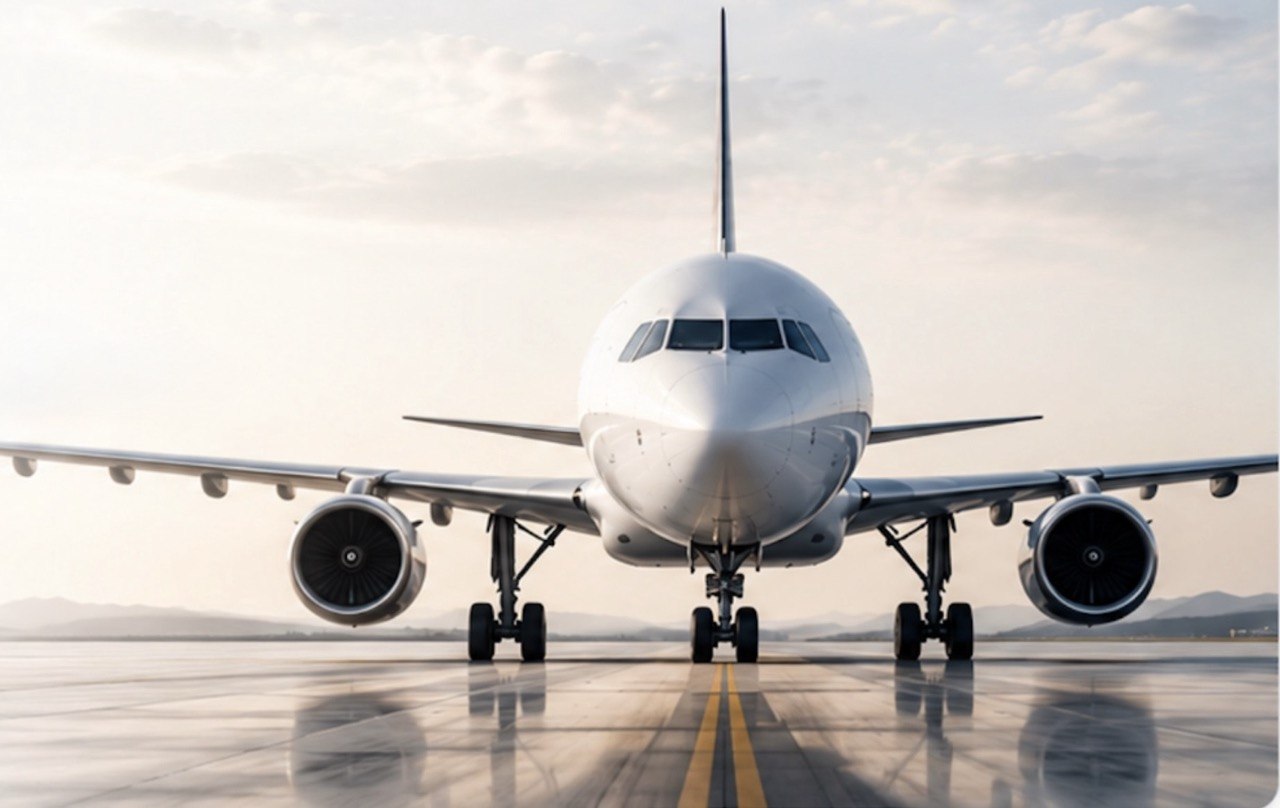
The initial fleet plans of Shankh Air are based on narrow-body airplanes of the Airbus model, which are suitable for domestic flights:
| Aircraft Type | Role |
|---|---|
| Airbus A320 | Primary aircraft for short to medium-haul domestic services |
| Airbus A321 | Potential expansion aircraft for higher-capacity routes |
(Table Source- The New Indian Express)
The company is planning to begin with three Airbus A320 aircraft, with two additional aircraft immediately following, according to its conversations with the press. Such a fleet size will enable the company to be flexible in high-demand metro regions as well as regional services. Further down the road, Shankh Air hopes to expand to 20-25 airplanes within the next couple of years as routes and demand increase.

Although the official seating layouts are yet to be released, full-service airlines usually provide at least two types of cabins:
Economy Class: Standard seating with no charge services on domestic flights.
Premium/ Business Class: More comfort, priority services, and amenities.
To provide some background on the entry of Shankh Air, Sanjay Lazar, an aviation industry expert, the CEO of Avialaz Consultants, observed that:
“The new entry licenses, such as that of Shankh Air is a good thing, but that is only the start of a long process of regulations and operational obstacles. The actual problem of fledgling carriers is how to find a plane, personnel, and long-term capital, and cope with compliance with the rules.“
The observation by Lazar is important in the sense that most startups experience early approvals and fail in the acquisition and certification of aircraft a problem that has a checkered past in the Indian aviation industry.
Lucknow is likely to be the initial route hub of the airline, with it linking it to large metros, including Delhi, Mumbai, Bengaluru, and Hyderabad, as reported by The Economic Times of India. As time progresses, there is a likelihood of more secondary routes being added connecting other cities in Uttar Pradesh and the northern part of India, which will enhance the regional connectivity.
The given network strategy is a calculated effort to strike a balance between high-yield trunk routes and underserved sectors to generate revenue stability yet create brand loyalty beyond the usual metro routes.
As per the reports of The Economic Times of India. Shankh Air is scheduled to commence operations in the first quarter of 2026.
The first services are likely to connect Lucknow with such large cities as Delhi, Mumbai, and possibly other regional hubs within the state of Uttar Pradesh. The prices of the tickets will also be relatively competitive in an effort to attract middle-class passengers and first-time fliers in unexplored markets.
In addition to domestic flights, Shankh Air has expansive strategies to launch international flights in 2028-2029 based on the performance and market factors.
Regarding pricing, Shankh Air will have a competitive and less aggressive low-cost fare structure. Contrary to pure low-cost models like IndiGo or Akasa Air, the full-service status positioning of Shankh Air implies slightly higher fares than the low-cost carriers and cheaper than the premium legacy services on similar routes. This middle-ground approach will target passengers who provide service consistency but would not pay a high premium.
Competitionally, the airline ventures into an industry that is dominated by the size of IndiGo and the scope of networks of Air India. The regional focus, personalised service, and symbolic touch of being a home-grown airline in the north are some of the differentiation strategies of Shankh Air.
To consumers, the expectations are pegged on dependable timetables, open prices, friendly services, and better access to non-metro cities. Operational discipline is where most of the Indian startups have previously failed, and this aspect will determine the success of the airline.

Join the conversation
No comments yet
Be the first to share your thoughts!
Sign In to Comment