
September 29, 2026 • Parijat Sourabh

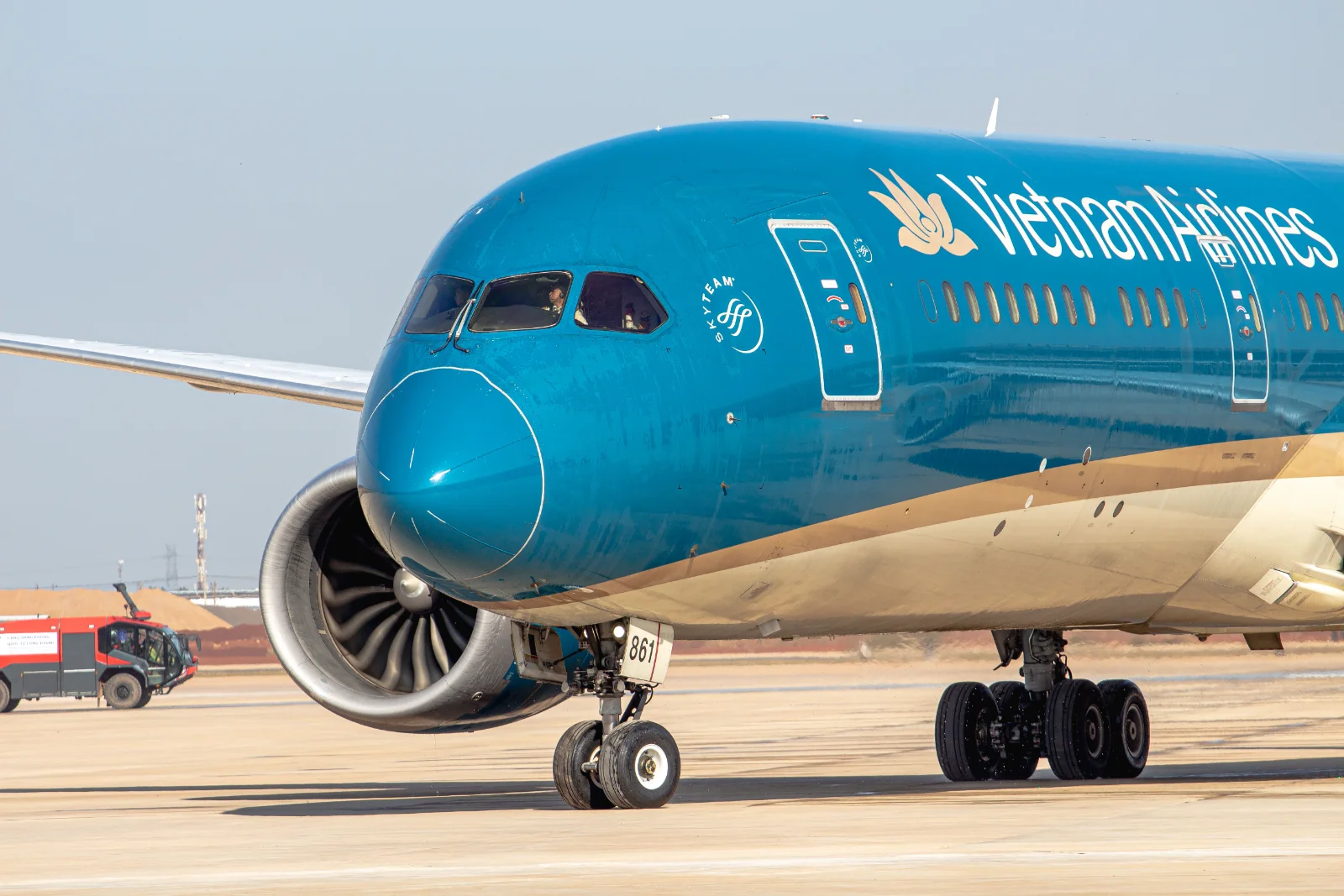
The aircraft was operating a flight from Munich to Hanoi when the accident occurred.
The aircraft’s seating configuration at the time of the occurrence had a capacity of 274 passengers. There were four pilots, 12 cabin crew members and 271 passengers on board. However, no injuries or fatalities were reported.
According to an interim report by the German Federal Bureau of Aircraft Accident Investigation (BFU), the aircraft’s flight recorder (EAFR) recorded movement of the two left-side brake pedals during the takeoff run. The corresponding braking activation recorded by the Brake System Control Units (BSCUs) was 15% on the left side and 6% on the right.
The report said another braking event involving the brake pedals and brakes was recorded during the takeoff run. The EAFR parameters for the left BSCU’s inboard and outboard channels reached a maximum value of about 27%, while the corresponding maximum value for the right BSCU’s inboard and outboard channels was 17%.
The report said the aircraft began its take-off rotation at 163 kt IAS, approximately abeam of the runway threshold. It lifted off from the grass area beyond the threshold of Runway 08R. Tyre tracks continued beyond the threshold and across the 60-metre-long clearway behind it.
According to the EAFR recording, the aircraft’s indicated airspeeds for take-off were 169 kt IAS for V1, 175 kt IAS for Vr and 180 kt IAS for V2. However, the aircraft began rotating at 163 kt IAS, below its recorded Vr speed.
The aircraft reached V1 only after becoming airborne, at a radio altitude of about 11 ft above the ground.
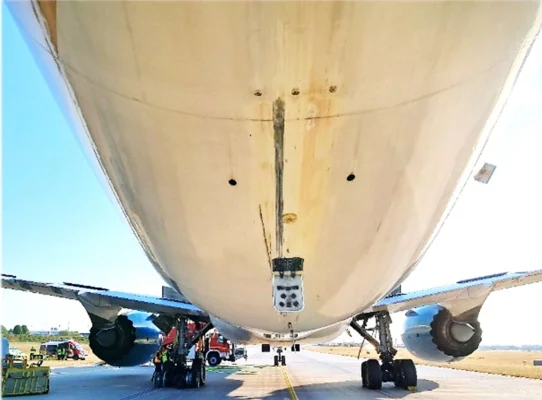
The aircraft’s tail section and the wheels of both main landing gears collided with parts of the approach lighting system.
The crew jettisoned 62 metric tonnes of fuel before returning to Munich Airport. The aircraft’s first approach to Runway 26R was carried out with the main landing gear extended, allowing ground personnel to visually inspect the landing gear.
At 5,000 ft above mean sea level (AMSL), a go-around was initiated, following which the landing gear was retracted. The second approach was also conducted with the main landing gear extended. At 2,600 ft above mean sea level (AMSL), a second go-around was initiated, after which the landing gear was retracted again.
Thereafter, the approach was carried out and the aircraft touched down on Runway 26R with a landing mass of 176.5 tonnes and a touch-down speed of 143 kt IAS.
The report said four tyres on the left main landing gear were found to be damaged after landing.
The 64-year-old pilot in command (PIC) held an Airline Transport Pilot Licence (ATPL(A)) issued by the Civil Aviation Authority of Vietnam on January 10, 2022. He had accumulated 27,182 flight hours, including experience on aircraft such as the ATR, Boeing 777 and Boeing 787.
The BFU report did not specify whether the brake inputs were caused by pilot action or a technical malfunction. The BFU seized several system components, including the Brake System Control Units (BSCUs) and Electric Brake Actuator Controllers (EBACs), which will be examined in detail.
The CVR recording of the take-off was overwritten, as the aircraft landed and its power was switched off more than two hours after take-off.
The investigation into the Vietnam Airlines accident at Munich Airport is ongoing, and no final conclusions have been reached.


Join the conversation
No comments yet
Be the first to share your thoughts!
Sign In to Comment