
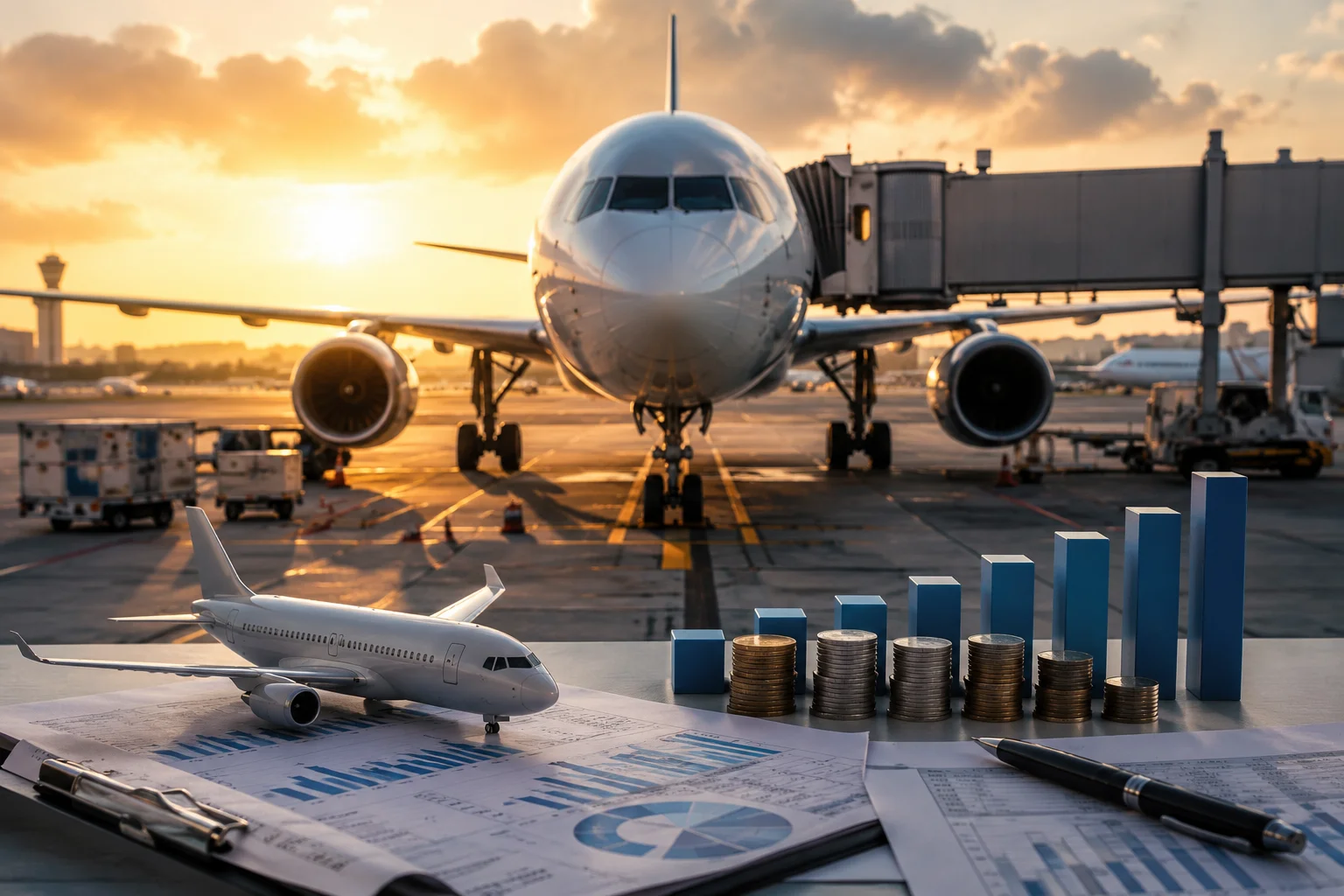
A packed aircraft is often seen as a sign of a profitable flight. However, a new analysis by global consulting firm McKinsey & Company shows airline economics are far more complex, with even busy flights generating relatively modest returns once operating costs are accounted for.
September 16, 2026 • Avionyz
Using a hypothetical one-way Boeing 787 flight between London and New York, McKinsey partners Steve Saxon and Jaap Bouwer break down the revenue and costs behind a single journey. Their findings highlight why airlines continue to operate on thin margins despite healthy passenger demand.
Ticket sales are only part of the revenue story
According to the analysis, passenger tickets remain the largest source of income, but airlines increasingly rely on additional revenue streams to improve returns.
For the hypothetical flight:
- Economy class: 173 passengers generate about $69,000 in revenue.
- Premium economy: 26 passengers contribute roughly $26,000.
- Business class: 22 passengers bring in about $66,000.
- Total ticket revenue: Around $160,000.
Beyond ticket sales, airlines earn money from ancillary services and cargo.
These include baggage fees, paid seat selection, onboard purchases and loyalty programme partnerships. In the example, ancillary revenue averages $30 per passenger, adding $6,600 to total earnings. Cargo carried in the aircraft's belly contributes another $7,000, taking overall revenue to approximately $174,000.
Fuel remains the biggest expense
The analysis shows costs rise almost as quickly as revenue.
Among the largest expenses on the London to New York route:
- Jet fuel: Nearly $51,000
- Aircraft lease: Around $25,000
- Airport charges: Approximately $35,000
- Aircraft maintenance: Around $10,000
- Cabin crew salaries and benefits: About $6,200
- Pilot salaries and benefits: Around $6,000
Additional costs include catering, in-flight entertainment, air traffic control charges, ground handling, marketing and corporate overheads.
Combined, operating expenses reach about $153,000 for the single flight.
Healthy routes do not reflect the wider industry
After deducting costs from revenue, the hypothetical flight produces an operating profit of roughly $21,000, equivalent to an operating margin of around 12%.
However, Steve Saxon notes this does not represent the broader airline industry.
According to McKinsey, the global airline industry's average operating margin typically ranges between 3% and 6%, reflecting the financial pressure carriers face across less profitable routes and changing market conditions.
The London to New York example benefits from being a premium route with strong business travel demand. McKinsey notes that connecting passengers usually generate 20% to 30% lower yields than point-to-point travellers, reducing profitability on many other routes.
Small changes can quickly erode profits
The analysis also highlights how easily airline profitability can be affected by external factors.
McKinsey points to several variables that can reduce margins, including:
- Higher spending on sustainable aviation fuel
- Flight delays, which increase operational costs
- Lower-yield connecting passengers
- Route mix and fluctuating passenger demand
These factors help explain why airlines continue to focus on improving both revenue and efficiency rather than relying solely on passenger volumes.
Airlines are looking beyond ticket prices
According to Steve Saxon and Jaap Bouwer, airlines are pursuing multiple strategies to strengthen profitability.
These include improving pricing and revenue management, expanding bundled products and ancillary services, increasing aircraft utilisation, optimising maintenance schedules and lowering distribution costs.
The analysis offers a reminder that a full aircraft does not automatically translate into strong financial performance. Even on busy routes, airlines operate within a narrow profit window where fuel prices, operational disruptions and cost inflation can quickly alter the economics of a flight.
Join the conversation
No comments yet
Be the first to share your thoughts!
Sign In to Comment