

An aircraft appears to be a single machine, but every flight depends on dozens of structures working together with precision. From the wings that generate lift to the control surfaces that guide every turn, each component performs a specific role in keeping an aircraft stable, efficient and safe.
September 15, 2026 • Avionyz
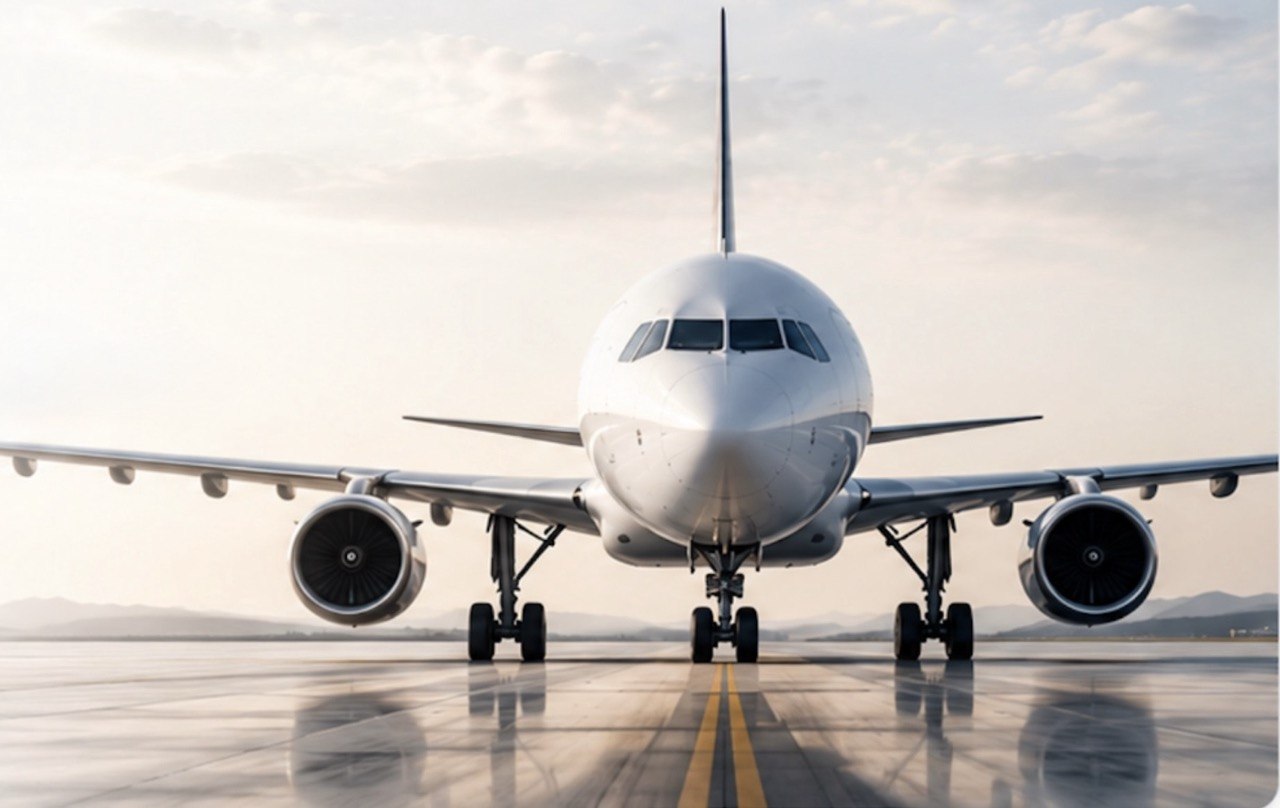
According to NASA Glenn Research Center's Beginner's Guide to Aeronautics, although aircraft vary widely in size, design and purpose, every configuration must provide the four forces required for flight: lift, weight, thrust and drag. Whether it is a commercial airliner, a business jet or a military aircraft, the arrangement of these components may differ, but the principles remain the same.
Here is a closer look at the major parts of an aircraft and the role each plays during flight.
Wings generate the lift that keeps aircraft airborne
The wings are the primary lifting surfaces of an aircraft.
As an aircraft moves through the air, airflow over and beneath the wings creates lift, allowing the aircraft to overcome its weight. According to NASA, the wings must generate enough lift to support not only the aircraft itself but also its fuel, passengers and cargo.
Modern commercial aircraft also feature winglets at the tips of the wings. These upward-angled extensions reduce aerodynamic drag by minimising wingtip vortices, improving fuel efficiency during flight.
To move the aircraft forward, propulsion systems provide the necessary thrust to overcome drag.
Depending on the aircraft type:
- Commercial airliners typically use turbine engines mounted beneath the wings.
- Smaller aircraft often rely on propellers driven by piston or turboprop engines.
The wings therefore perform two closely linked functions by generating lift while working with the propulsion system to maintain efficient flight.
Tail surfaces provide stability and directional control
An aircraft's tail is far more than a structural extension.
According to NASA, two fixed surfaces provide stability throughout flight:
- Vertical stabiliser
- Horizontal stabiliser
The vertical stabiliser prevents unwanted side-to-side movement of the nose, known as yaw.
The horizontal stabiliser controls the aircraft's tendency to pitch upward or downward, helping maintain longitudinal stability.
Without these stabilising surfaces, pilots would need to make constant corrections throughout every phase of flight.
NASA notes that aircraft designs have evolved over time. For example, the Wright brothers' 1903 Flyer positioned the horizontal control surface ahead of the wings, a configuration known as a canard.
Flight control surfaces allow pilots to manoeuvre
Attached to the wings and tail are movable control surfaces that enable pilots to change the aircraft's attitude and direction.
Each serves a distinct purpose:
- Ailerons control roll by raising one wing while lowering the other.
- Elevators move the aircraft's nose up or down to control pitch.
- Rudder moves the nose left or right to control yaw.
These surfaces are hinged to the fixed parts of the aircraft. By changing the airflow around the aircraft, they alter the aerodynamic forces acting on it, allowing controlled manoeuvres.
Commercial aircraft increasingly supplement these controls with sophisticated flight computers, but the aerodynamic principles remain unchanged.
Flaps and slats help during take-off and landing
Passengers seated near the wing often notice the wing changing shape before take-off and after landing.
These changes occur because flaps and slats are being deployed.
Flaps are movable sections located along the trailing edge of the wing. Lowering them increases the wing's lifting capability, allowing aircraft to fly safely at lower speeds during take-off and landing.
Many aircraft also extend slats from the leading edge of the wing.
Together, these devices:
- Increase lift
- Reduce stall speed
- Improve low-speed handling
- Support safer take-off and landing performance
The changing wing configuration is one of the most visible examples of how aircraft adapt to different phases of flight.
Spoilers reduce lift and assist braking
Despite their name, spoilers play an important role in aircraft control.
Spoilers are movable panels mounted on the upper surface of the wings.
When deployed, they disrupt the smooth airflow over the wing, reducing lift.
Spoilers serve several purposes:
- Assist roll control on some aircraft
- Help the aircraft descend more rapidly
- Reduce lift immediately after touchdown
- Improve braking performance during landing
Once an aircraft lands, spoilers transfer more of the aircraft's weight onto its landing gear, allowing the wheel brakes to operate more effectively.
The fuselage forms the aircraft's central structure
The fuselage serves as the aircraft's main body.
It connects the wings, tail, landing gear and propulsion systems while providing space for passengers, cargo and crew.
The fuselage houses:
- The cockpit
- Passenger cabin
- Cargo compartments
- Aircraft systems
- In some aircraft, fuel tanks
Commercial aircraft generally store most fuel within the wings, although certain aircraft designs also carry fuel inside the fuselage.
The fuselage must also withstand substantial aerodynamic forces throughout every stage of flight while maintaining a safe, pressurised environment for passengers.
Aircraft layouts vary with mission requirements
While commercial airliners follow a broadly similar design, aircraft configurations vary significantly depending on their intended role.
Examples include:
- Military fighter aircraft, which often position engines within the fuselage rather than beneath the wings.
- Aircraft using stabilators, which combine the horizontal stabiliser and elevator into a single movable surface.
- Canard aircraft, where forward-mounted control surfaces replace the conventional tailplane arrangement.
Different layouts address different operational priorities, including speed, manoeuvrability, payload capacity and mission performance.
Despite these variations, every aircraft must still balance the same four aerodynamic forces needed for sustained flight.
Every component contributes to safe flight
Aircraft design represents a careful balance between aerodynamics, structural engineering and operational efficiency.
The wings generate lift, engines provide thrust, stabilisers maintain balance and control surfaces guide the aircraft through every phase of flight. Components such as flaps, slats and spoilers adapt the wing's performance as operating conditions change, while the fuselage integrates every major system into a single structure.
Aircraft may differ dramatically in appearance, but each design ultimately serves the same purpose: producing the lift, thrust, stability and control required to fly safely and efficiently.


Join the conversation
No comments yet
Be the first to share your thoughts!
Sign In to Comment