
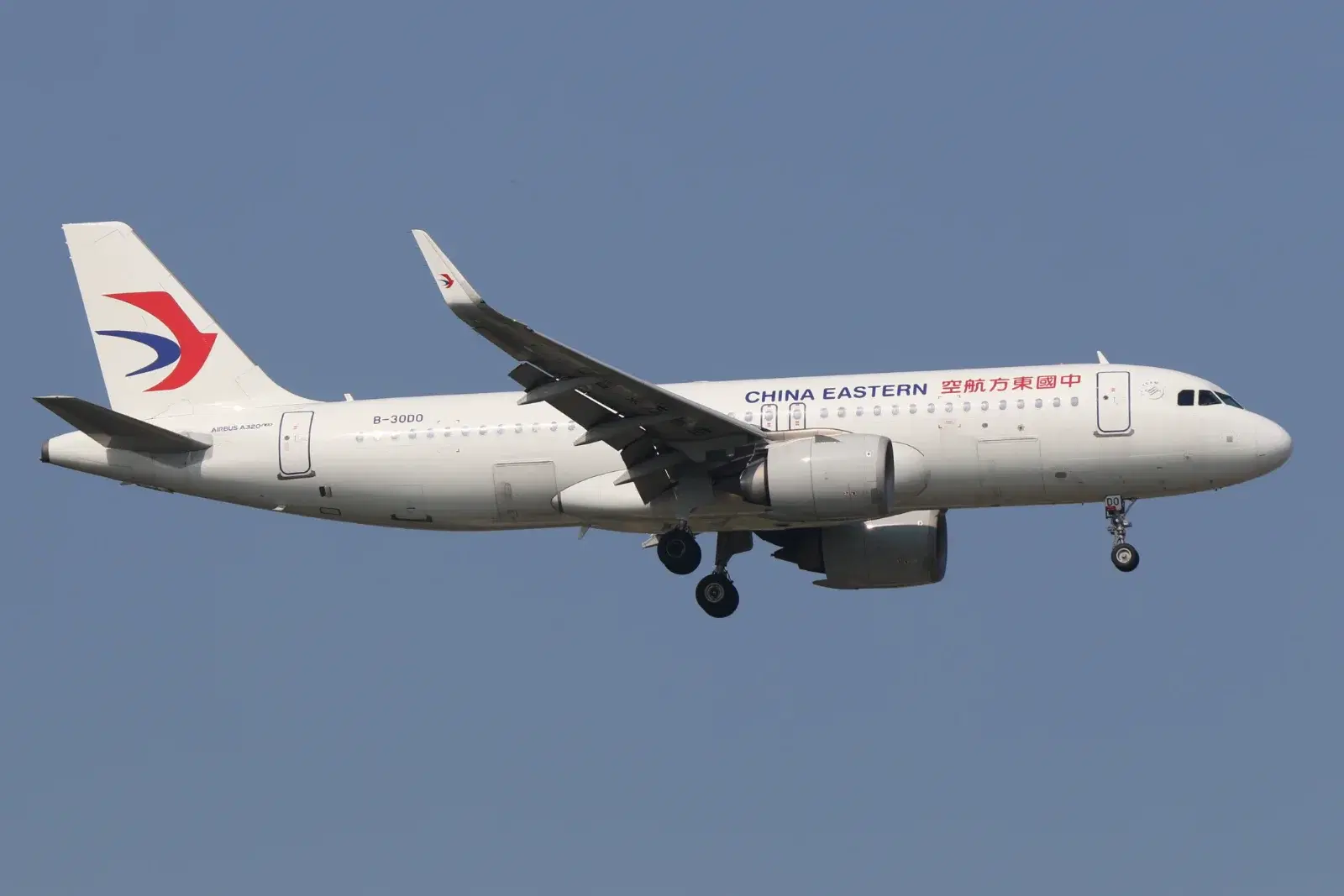
China Eastern Airlines has selected CFM International LEAP-1A engines to power 101 new Airbus A320neo family aircraft, alongside spare engines and a long-term services agreement. The agreement was marked by a signing ceremony at the 9th China International Import Expo (CIIE) in Shanghai.
“CFM LEAP engines are helping us build one of the most modern fleets in the industry, and we’re pleased to strengthen that relationship with this latest agreement,” said Xiaoqun He, Executive Vice President at China Eastern Airlines. “An airline’s success depends not only on the reliability and fuel efficiency of its engines, but also on reliable support and services. This makes CFM a natural partner.”
China Eastern’s new fleet will comprise A320neo, A321neo and A321XLR aircraft. The airline currently operates 215 A320neo and A321neo aircraft powered by LEAP-1A engines, alongside Boeing 737 MAX and COMAC C919 aircraft equipped with LEAP-1B and LEAP-1C engines, respectively.
Additionally, China Eastern operates more than 380 aircraft powered by CFM56 engines, including models from the Airbus A320ceo and Boeing 737NG families.
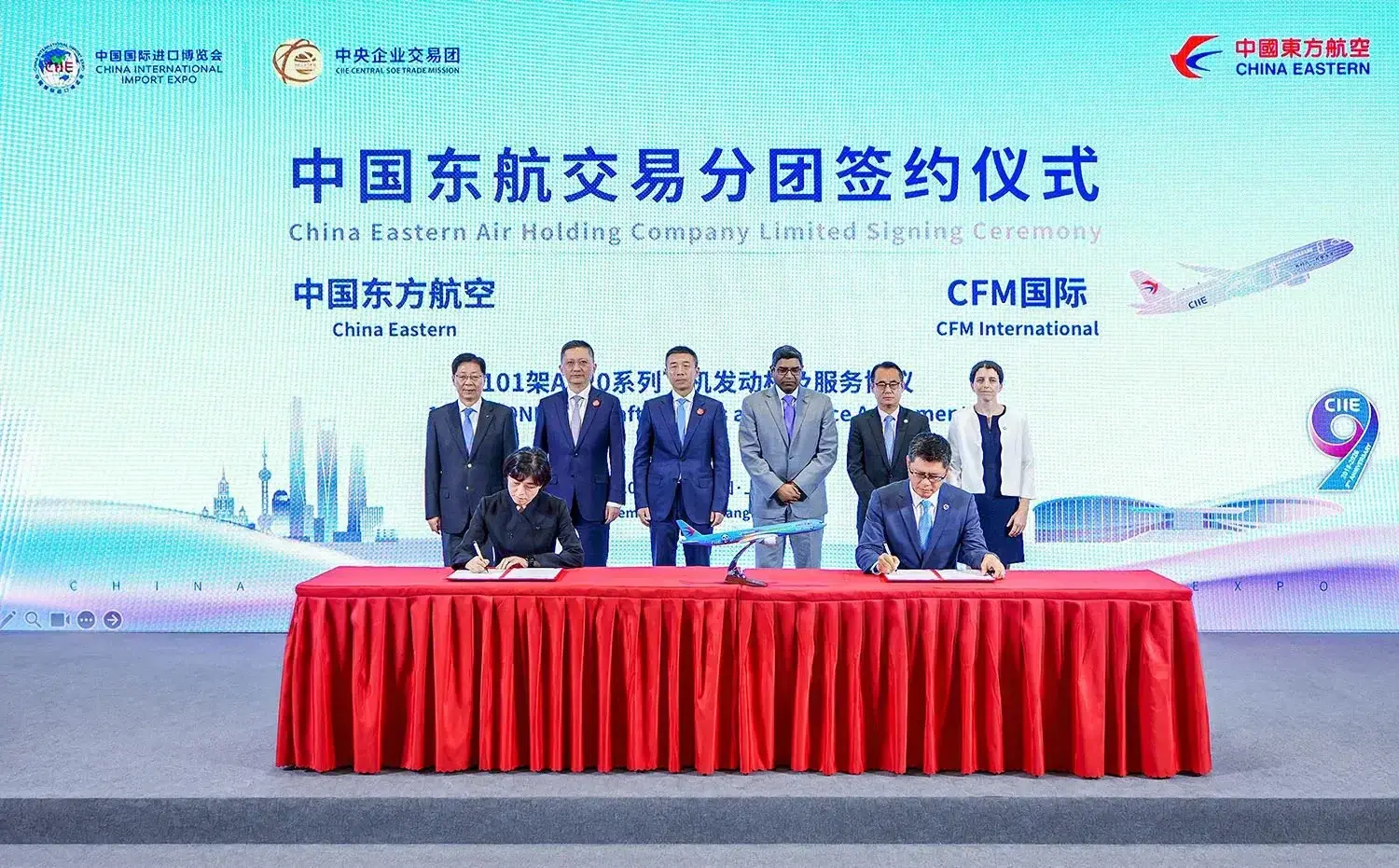
“China Eastern Airlines was CFM's first mainland China customer, going back to 1985, when China Eastern Yunnan took delivery of its first Boeing 737-300 powered by CFM56-3C engines. With this agreement, we’re building on a relationship that spans more than four decades,” said Weiming Xiang, President of CFM Greater China. “We’re committed to upholding the highest standards of reliability, efficiency, and utilisation for which CFM LEAP engines have been known.”
In the 10 years since the LEAP engine entered service, CFM has delivered more than 10,000 engines, which have collectively accumulated over 100 million flight hours. The company continues to enhance the LEAP fleet through upgrades, including a high-pressure turbine (HPT) durability kit designed to extend time on wing and a reverse bleed system (RBS) aimed at reducing airline maintenance requirements.
CFM is also focused on improving engine availability through MRO performance and competitive ownership costs, while offering airlines aftermarket competition through its open MRO ecosystem.
Join the conversation
No comments yet
Be the first to share your thoughts!
Sign In to Comment