
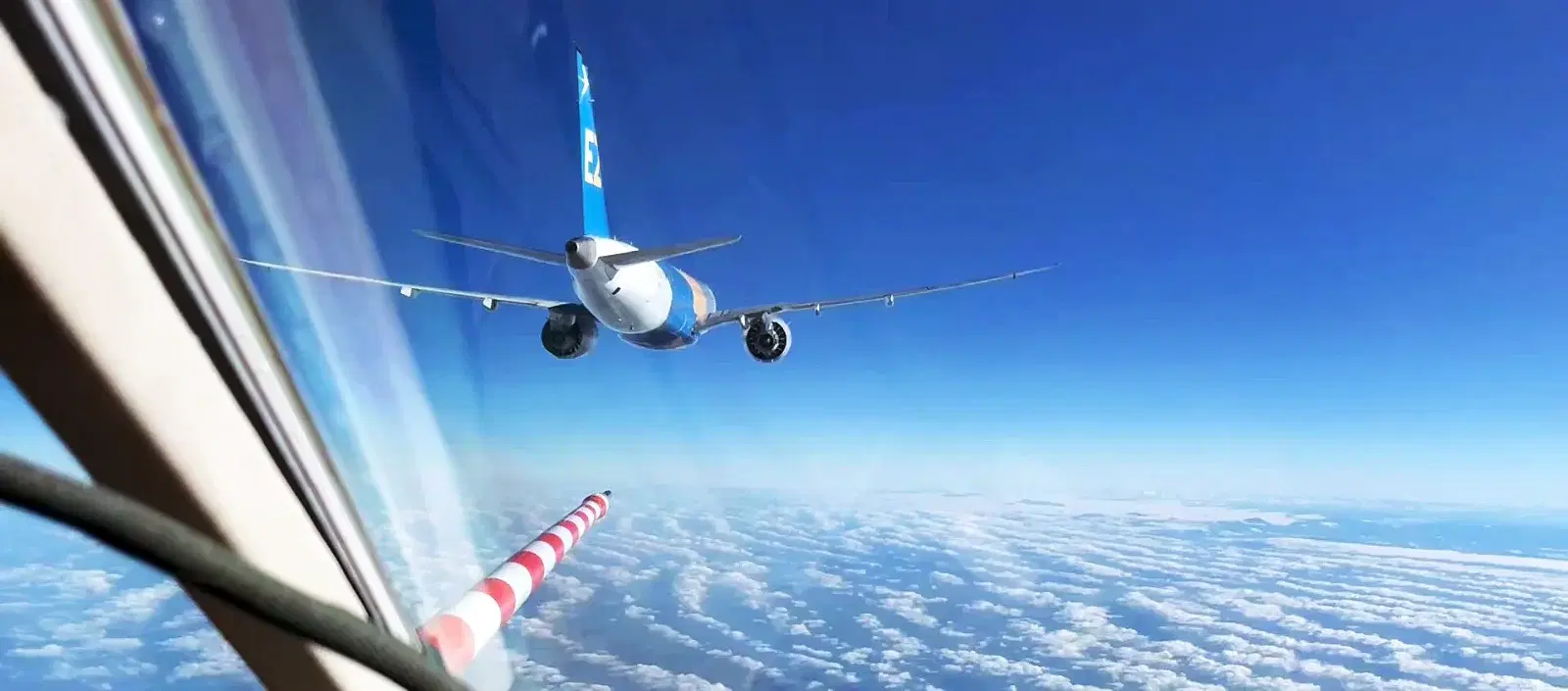
Embraer is participating in the international IGNITE-X (International Ground and Inflight Turbine Emission Experiment) research programme, led by the German Aerospace Center (DLR), to deepen understanding of contrail formation and explore ways to further minimise aviation's climate impact.
The initiative brings together several leading aerospace, academic and research organisations, including DLR, Embraer, RTX's Pratt & Whitney, Aerodyne Research and Missouri University of Science and Technology. Researchers are examining how fuel composition, particularly sulphur content, affects engine emissions, particle formation and the subsequent development of contrails.
Contrails are ice-crystal clouds that form when aircraft engine exhaust mixes with cold, humid air at cruising altitudes. They are recognised as a contributor to aviation's non-CO₂ climate impact. Through IGNITE-X, researchers are examining whether lowering the sulphur content of aviation fuel, alongside the use of advanced low-emission engine technology, can help reduce contrail formation.
The research campaign centres on Embraer's E195-E2, powered by Pratt & Whitney GTF PW1900G engines. During the trials, the aircraft is operating on both conventional jet fuel and specially produced low-sulphur aviation fuel, allowing researchers to compare engine emissions and particle formation under real-world flight conditions.
“The E195-E2 was designed to deliver outstanding efficiency and lower emissions, making it an ideal platform for advancing research into the future of sustainable aviation,” said Cleiton Silva, Vice President of Technology Development and Electronic Equipment at Embraer. “Through our participation in IGNITE-X, we are working alongside leading research institutions and industry partners to better understand the relationship between fuel characteristics, engine performance, and contrail formation. This collaboration reinforces Embraer's commitment to supporting science-based solutions that contribute to a more sustainable and environmentally responsible aviation sector.”
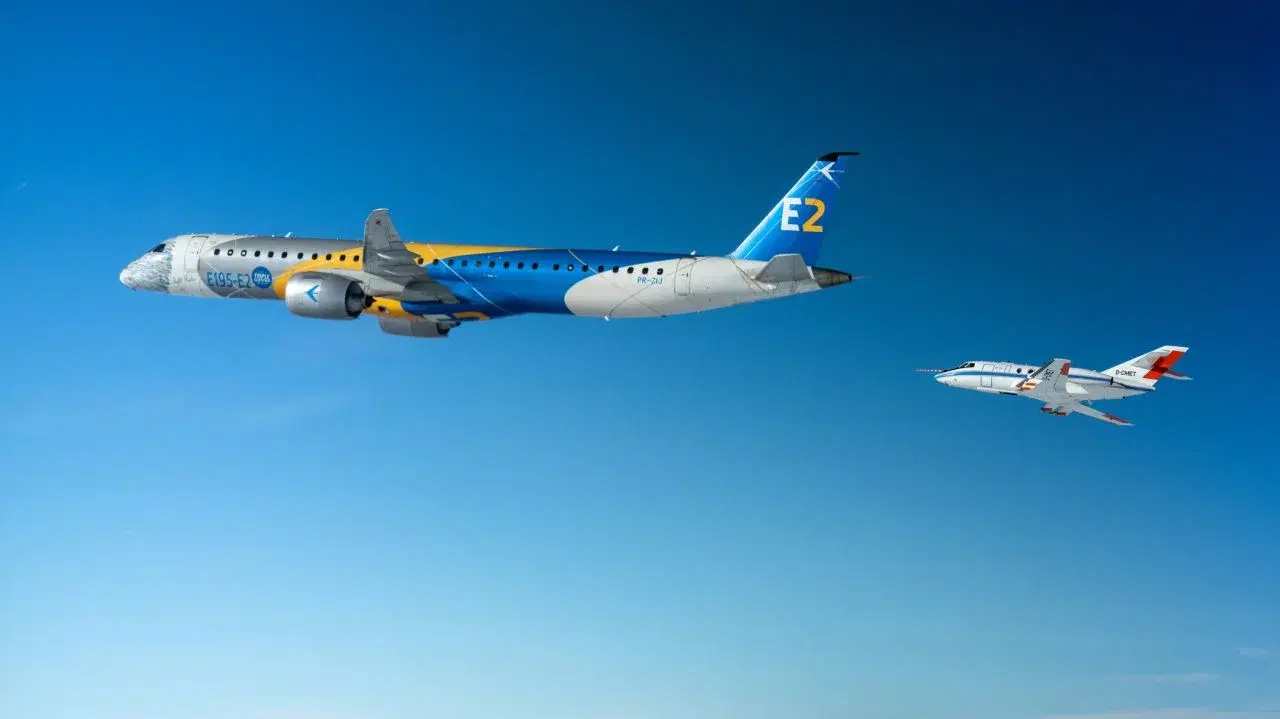
The E195-E2 is described as the most fuel-efficient and quietest small narrowbody aircraft in its segment, offering up to 30% lower fuel consumption and emissions compared with previous-generation aircraft. Its advanced aerodynamic design, combined with Pratt & Whitney GTF engines, makes it a suitable platform for assessing technologies and operational measures that could contribute to aviation's long-term sustainability goals.
During the flight campaign, DLR's Falcon 20E research aircraft follows the E195-E2 along designated test corridors over Germany, collecting data on exhaust emissions and contrail characteristics at different distances behind the aircraft. Researchers are also carrying out extensive ground-based measurements to assess ultrafine particle emissions across the engines' full operating range.
“We are measuring the emissions directly within the exhaust plume—this is both scientifically and operationally extremely challenging. The test procedure provides unique insights into the potential for reducing emissions. These innovative and, at the same time, challenging tests with our international stakeholders are the result of an exceptionally committed, trusting and inspiring collaboration between applied research and industry,” said Markus Fischer, DLR Divisional Board Member for Aeronautics.
The findings from IGNITE-X are expected to offer valuable scientific insights into aviation's non-CO₂ climate effects and help identify effective ways to mitigate them. The initiative highlights the aviation industry's increasing focus on collaborative, science-led research to advance sustainability and reduce the sector's overall climate impact.
Join the conversation
No comments yet
Be the first to share your thoughts!